
Tie Dye Dress vs Shibori Dress: What's the Difference
You have seen them both online. The vibrant, free spirited tie dye dress. And the elegant, artisanal shibori piece.
They look similar at a glance. But the difference in quality, flattery, and longevity is night and day. Whether you are shopping for a summer holiday, a wedding guest outfit, or simply a dress that makes you feel beautiful, understanding the distinction will save you time, money, and disappointment. Here is everything you need to know. No fluff.
Most women searching for a tie dye dress do not realise they are actually looking for a shibori dress. The two techniques are related. But the results are completely different. The fabric looks different. The pattern holds up differently over time. The drape on the body is not the same. And the piece tells a different story about where it came from.
If you have ever bought a tie dye dress that faded fast, looked messy in person, or felt cheaper than expected, the technique and/or material is almost always why. Here is the full breakdown. No jargon. No filler. So you know exactly what you are buying.
Quick Comparison
| Tie Dye | Shibori | |
|---|---|---|
| Origin | Western and American, 1960s | Japan, over 500 years old artisan |
| Pattern type | Random, swirling, circular | Controlled, linear, directional |
| Dye method | Multiple colours applied freely | Single or double colour, resist technique |
| Colour longevity | Fades faster, especially multi colour | More stable, especially indigo |
| Body flattery | Depends heavily on placement | Inherently elongating and slimming |
| Price range | Budget to mid range | Mid range to premium |
| Where to find it | Everywhere | Specialist artisan makers |
What Tie Dye Actually Is

Tie dye as most people know it is an American folk craft. It peaked in the 1960s (hippie) counterculture and has never fully left fashion since. The technique is simple. Fabric is twisted, bunched, or folded. Then it is dipped or squirted with multiple colours of dye. The result is the swirling rainbow spiral pattern you recognise immediately.
What separates tie dye that delights from tie dye that disappoints isn't the technique itself. It's the care behind it.
In cheap mass production, synthetic dyes are applied quickly at scale. Colour placement is rushed or left to chance. The pattern is rarely coordinated with how the garment will be cut, so motifs end up cropped awkwardly or lost in seams.
The result is hit-or-miss: muddy overlaps where colours bleed indiscriminately, generic swirls that feel arbitrary rather than intentional, and dye that fades fast because the chemistry was formulated for speed, not longevity.
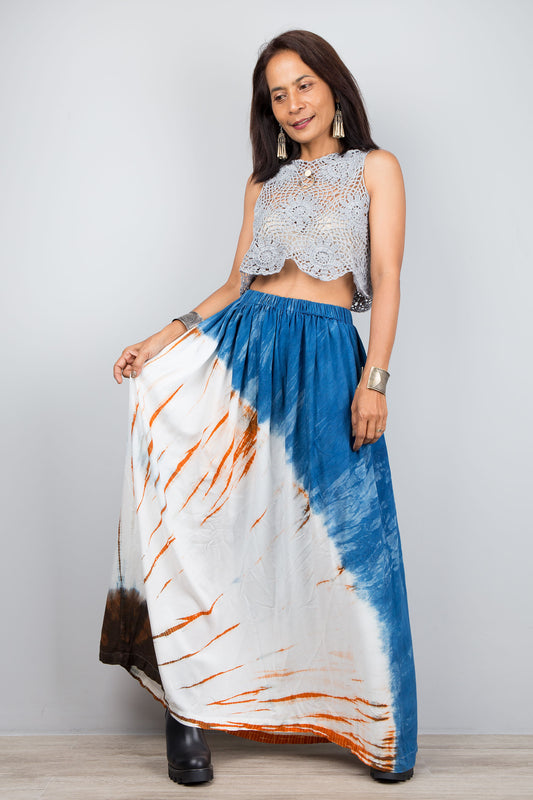
The body flattery issue follows the same logic. Circular and spiral patterns draw the eye outward from their centre point. When that centre lands on the hip, the bust, or the stomach through careless cutting, the optical effect works against you. This is not a flaw in tie dye. It is a flaw in not caring where things land.
Done properly, with considered colour selection, deliberate pattern placement, and fabric chosen for how it moves, tie dye is genuinely one of the most beautiful techniques in contemporary fashion. Nuichan's tie dye maxi dresses are made with exactly that level of care. The gap between those pieces and a $15 festival dress is not a matter of taste. It is a matter of craft.
What Shibori Actually Is

Shibori is a Japanese textile art with documented history stretching back over 500 years. The name covers a family of resist dye techniques. There is arashi, which is pole wrapping. There is itajime, which is clamping between shaped boards. There is kumo, which is pleating and binding. And there is ne maki, which is binding around a core. Each produces distinctly different patterns. What they share is control. Every fold, binding, and clamp placement is intentional. The pattern that emerges is predictable and repeatable by a skilled maker.
Most shibori uses indigo dye. This is a natural plant based pigment. It has exceptional colour stability. It deepens beautifully with age rather than fading to grey. The resist technique means the dye penetrates the fabric where it should. It is blocked where it should not. This creates the characteristic crisp white and indigo contrast that is impossible to replicate with standard tie dye.
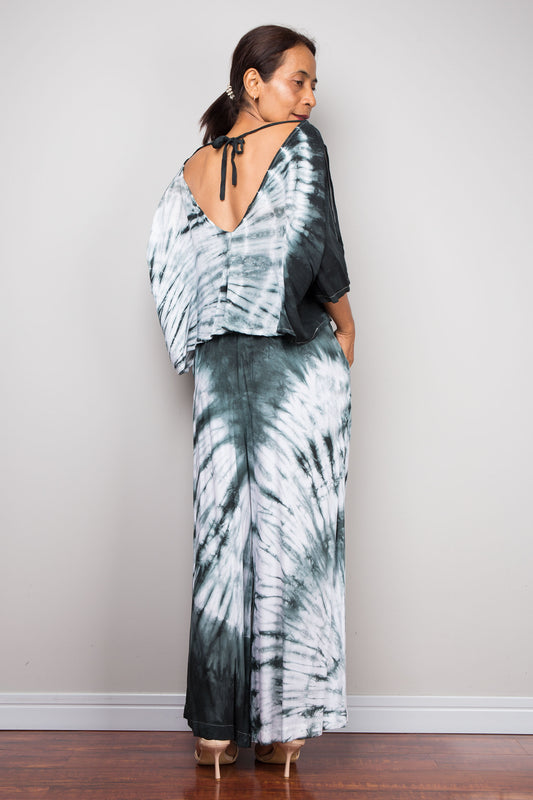
 Crucially for how the dress looks on the body, shibori patterns run with the structure of the garment. Arashi patterns create diagonal lines that elongate and slim. Itajime creates geometric repeats that give the fabric a textile quality closer to a printed fabric than a dyed one. These are patterns that work with the body's natural lines, not against them.
The 5 Real Differences That Matter When You're Shopping
1. The Pattern Has Direction

Most tie dye patterns radiate outward from a central point. The spiral. The bullseye. The sunburst. Shibori patterns flow along the length of the fabric. This single difference is what makes shibori so consistently flattering across body types. The vertical and diagonal lines created by arashi and itajime techniques create optical length on the body rather than width. Browse Nuichan's shibori dress collection and notice how the patterns on each piece run from shoulder to hem. That is not accidental.
2. The Colour Is More Stable
Multi colour tie dye relies on multiple synthetic dyes applied in sequence. Every additional colour is another variable for fading, bleeding, and colour shift with washing. Shibori's traditional indigo develops a patina with age rather than fading. The colour shifts from bright blue white to a richer, softer tone. Most wearers prefer this to the original.

3. Each Piece Is Genuinely Unique, But Not Random
Every tie dye piece is technically unique. So is every shibori piece. The difference is that shibori's uniqueness comes from intentional variation within a controlled technique. Two arashi pieces from the same maker will share a family resemblance while differing in detail. Mass tie dye's uniqueness often comes from inconsistency, not craft.
4. The Fabric Drape Is Different
Shibori is traditionally applied to fine, fluid fabrics. Rayon, silk, and fine cotton. These fabrics absorb the dye evenly. The fabrics used in quality shibori pieces are chosen for how they move, not just how they look flat. Nuichan's shibori tie dye maxi dress uses a premium rayon cotton blend specifically because it produces that characteristic fluid drape.
5. The Price Reflects Real Making Time
This one is uncomfortable but true. If you are comparing a $25 "shibori" dress to an $80 to $150 genuine shibori piece, you are not comparing two versions of the same thing. You are comparing a printed approximation to an actual handcrafted textile. The making time difference is real. A genuine shibori piece involves hours of preparation, dyeing, and finishing. That simply cannot be done at $25.
Which Style Is Best for Your Shape?
One of the biggest advantages of Shibori is that the pattern works with your body. Here is a quick guide to help you choose the most flattering silhouette for your frame.
- Pear or Hourglass: The halter neckline draws the eye upward. It balances wider hips. The deep V and open shoulders create a beautiful frame.
- Straight or Athletic: A kaftan silhouette adds softness and movement. It creates curves and flow without clinging. The unbroken vertical line is especially flattering.
- All Body Types: The vertical and diagonal lines of Shibori's arashi patterns are inherently slimming and elongating. Any piece with a linear pattern will create optical length.
Not sure which style suits you best? Browse our full Shibori collection or lookbook for real life styling inspiration.
Nuichan's Shibori Pieces Worth Knowing

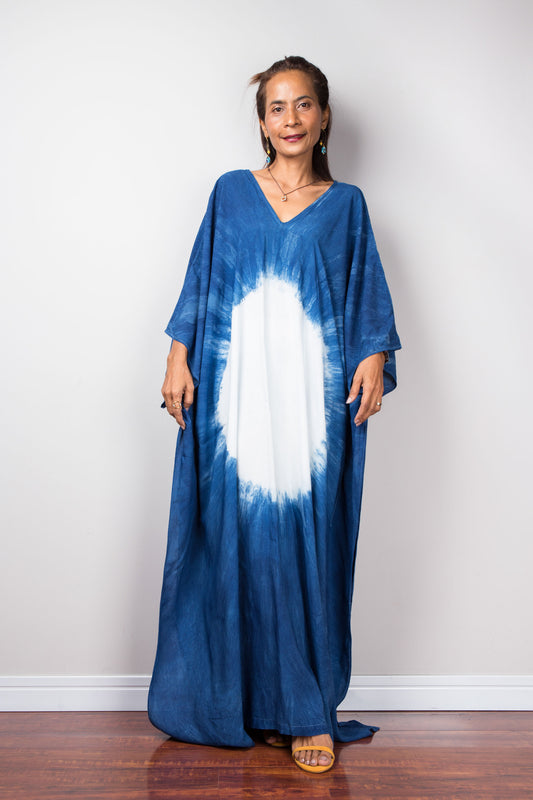
Shibori Tie Dye Kaftan
The kaftan cut is the single most flattering silhouette for a wide range of body types. It skims rather than clings. Creates an unbroken vertical line from shoulder to hem. Chest fits up to 58 inches.
Shop the Shibori Kaftan →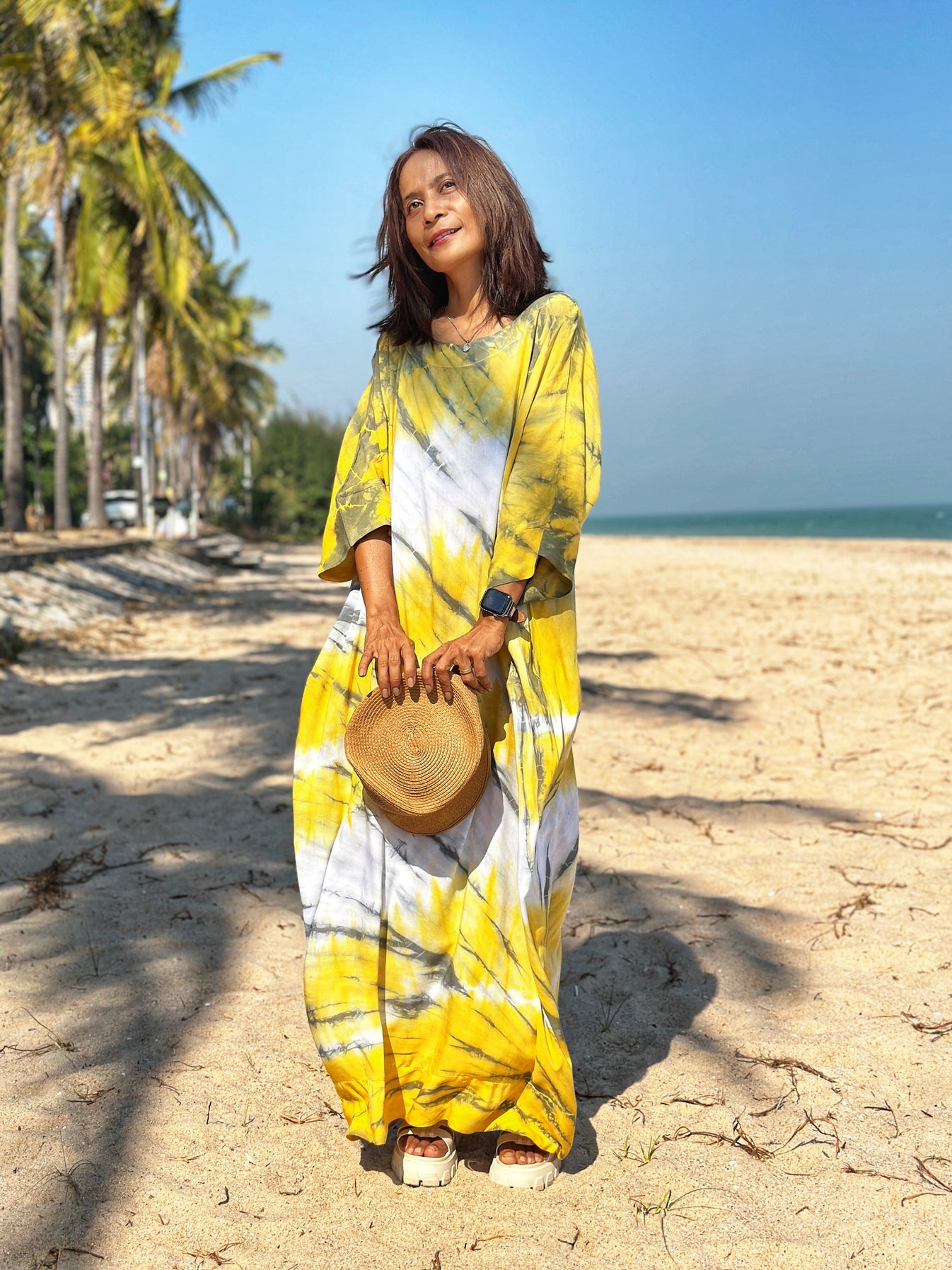
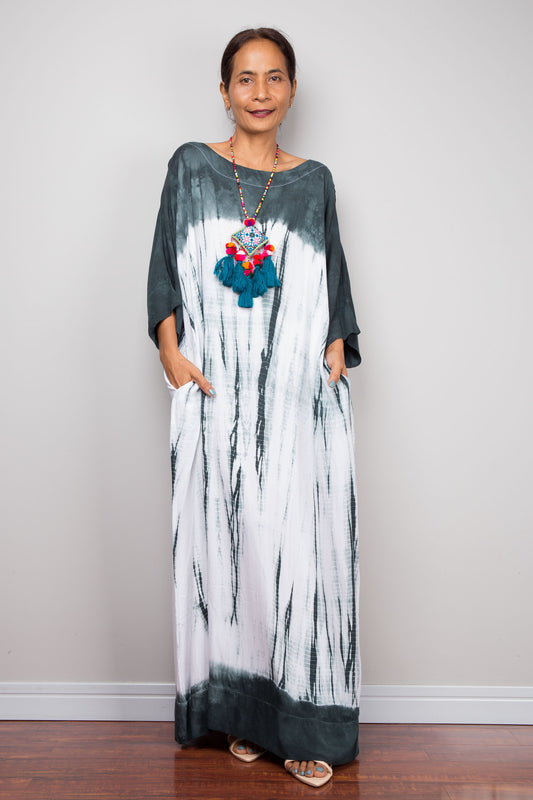
Shibori Loose Tie Dye Dress with Pockets
Premium rayon cotton blend. Loose bohemian silhouette with a deep contrast yoke and functional pockets. One of the most versatile pieces in the collection. Works as a beach dress, resort dress, or evening piece.
Shop the Shibori Maxi Dress →
Shibori Harem Pants
Cotton. The smocked waistband with adjustable drawstring draws the eye upward, creating a clean defined waist against the voluminous drop-crotch silhouette below. The sky blue and white palette sits perfectly in the 2026 trend direction toward fresh, airy tones.
Shop the Shibori Harem Pants →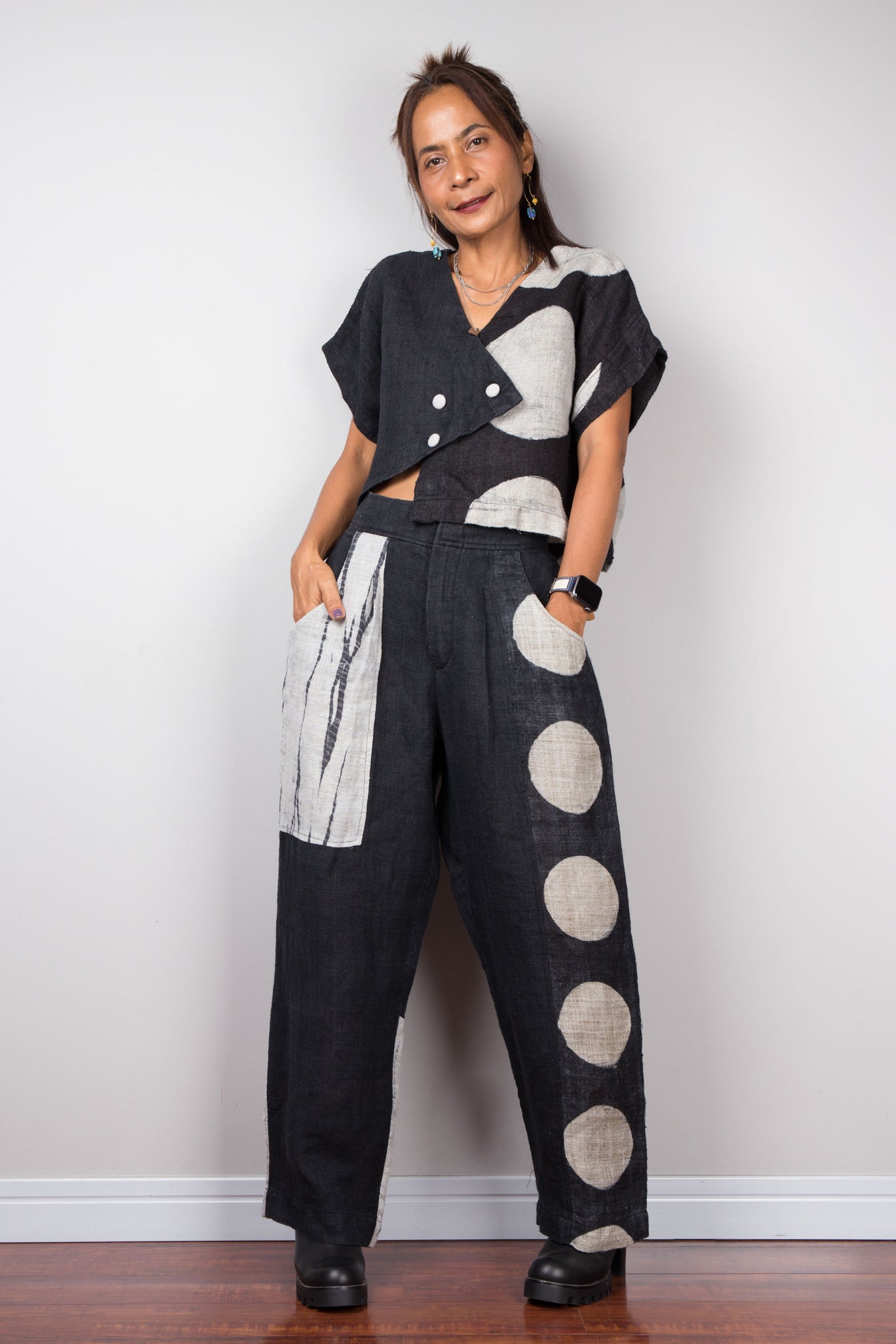
Indigo Shibori Pants and Top Ensemble
100% Hemp. The outfit set features a cropped jacket and wide-leg pants with a bold patchwork design, showcasing intricate shibori tie dye.
Shop the Shibori ensemble →Which Should You Buy?
If you want a dress for a festival, a beach holiday, or a casual summer look and price is the primary factor, standard tie dye is a perfectly reasonable choice. Browse Nuichan's full tie dye maxi dress collection for options across both techniques and price points.
However, if you want one dress that works for multiple occasions, investing in a Shibori piece gives you that flexibility. It works as a beach cover up, a stylish brunch outfit, or even an evening look with the right accessories. Its artisan quality, flattering cut, and timeless pattern make it appropriate for a far wider range of settings than a typical festival tie dye.
And if you want a dress that you will still be wearing in five years, that improves with age, that was made by a skilled hand using a technique with 500 years of history behind it, and that flatters your body through the inherent properties of the pattern itself, buy shibori. The price difference is real. So is the difference in what you get.
Explore the full Nuichan shibori collection. Every piece is handcrafted in our small studio in Thailand and ships worldwide with tracking.
Frequently Asked Questions
Is shibori the same as tie dye?
No. Shibori is a specific Japanese resist dye technique with controlled, intentional patterns. Tie dye is a broader Western term for fabric twisted and dyed in multiple colours. Shibori is older, more precise, and produces more consistent results. The two are often grouped together because both involve binding fabric before dyeing. But the outcomes are visually and structurally quite different.
Does shibori fade?
Traditional shibori uses indigo dye. This is exceptionally colour stable compared to the synthetic dyes used in most mass produced tie dye. Rather than fading to a washed out version of itself, indigo develops a patina. It softens slightly with each wash into a richer, lived in tone. Most wearers prefer this to the original. Proper care, cold hand wash, hang to dry, no direct sunlight, keeps a shibori piece looking beautiful for years.
Why is shibori more expensive than tie dye?
Because it takes significantly longer to make. A genuine shibori piece involves careful fabric preparation, precise binding or folding, dye bath immersion, multiple rinse and oxidation stages, and finishing. These are hours of skilled work that simply cannot be done at mass market prices. If you see something labelled "shibori" under $40, it is almost certainly a printed approximation rather than a hand dyed piece.
Is shibori good for all body types?
Yes. And more consistently so than standard tie dye. Shibori's directional patterns, such as diagonal lines, vertical stripes, and linear geometric repeats, create optical length on the body rather than width. Standard tie dye's circular and spiral patterns can draw the eye outward from their centre point, which can be unflattering depending on where that centre lands.
How do I care for a shibori dress?
Hand wash in cold water with a mild detergent. Wash separately from other garments for the first few washes, as some colour release is normal. Hang to dry away from direct sunlight. Do not bleach. Avoid the tumble dryer, as the heat and agitation can affect both the fabric and the dye over time.
What fabric is shibori made on?
Traditional shibori is applied to fine, fluid fabrics such as silk, fine cotton, and rayon. These absorb indigo dye evenly and drape beautifully. Nuichan's shibori dresses use a premium rayon cotton blend chosen specifically for its fluid movement and soft hand feel.
Can I wear a shibori dress to a formal occasion?
Yes, with the right styling. A shibori maxi in deep indigo with a V or halter neckline, paired with statement jewellery and heeled sandals, reads as elevated and intentional rather than casual. The artisan quality of a hand dyed piece photographs exceptionally well at events. See our lookbook for styling inspiration.
Also worth reading: Tie Dye Kaftan Collection · New Arrivals · Best Sellers · Lookbook · Shipping & Returns