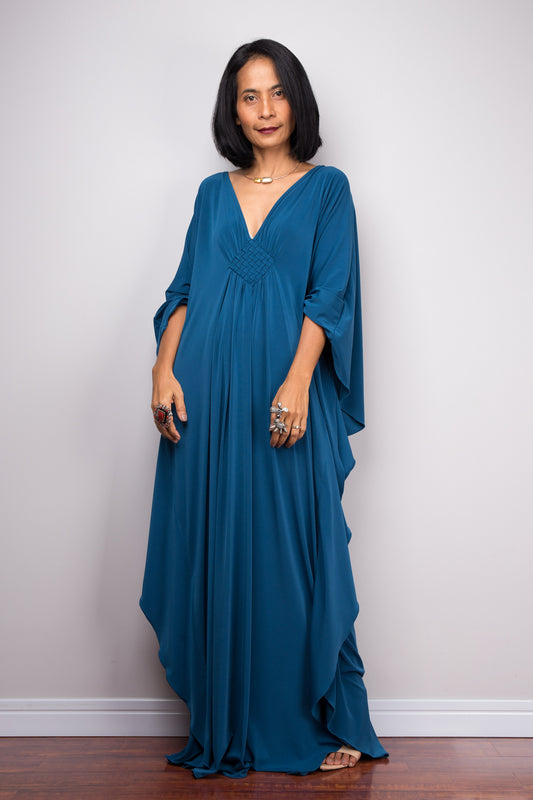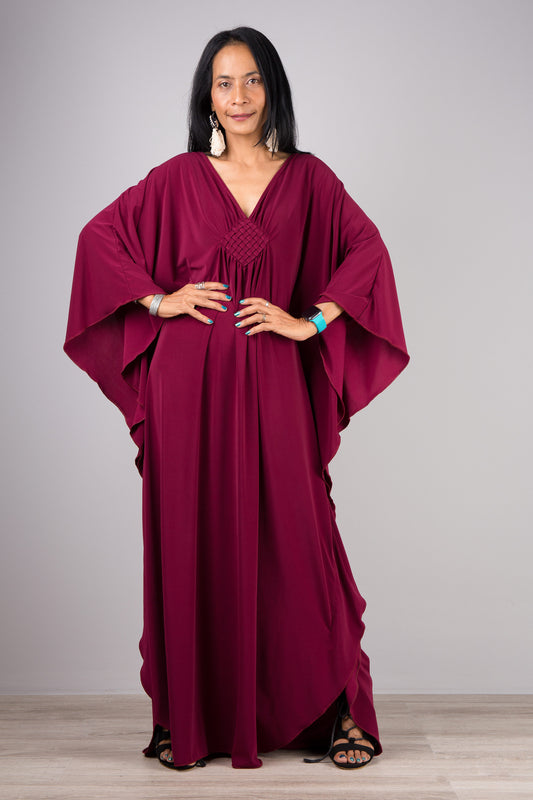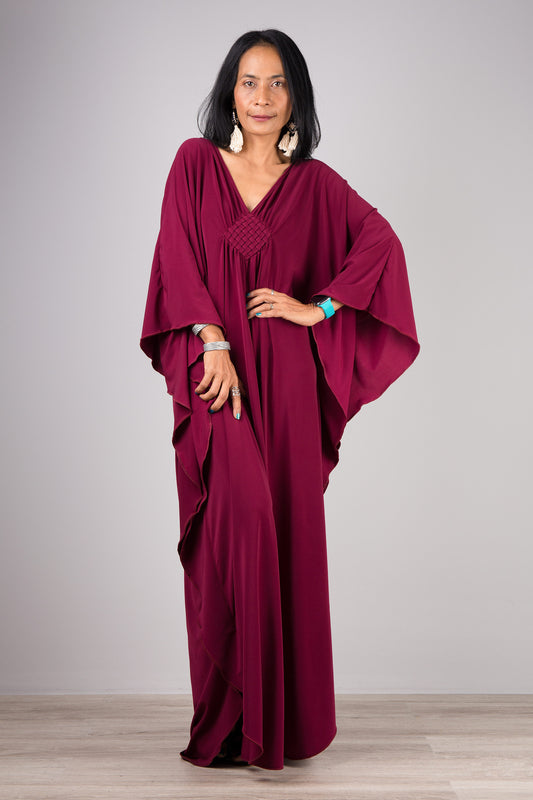

How to Choose the Right Kaftan: Fit, Length and Proportion
Yaowalak NuichanKaftans come in many different shapes and proportions. Some are short and simple, others are long and wide. They can be made from light cotton, handwoven hemp, soft gauze or fluid fabrics.
Because of this variety, choosing a kaftan is not just about finding the right size. Length, width, sleeves, neckline and fabric all affect how the garment fits and how it looks when you wear it.
The good news is that you don’t need complicated rules. Understanding a few key measurements and proportions makes the decision much clearer.
In this guide, we look at the most useful things to check before you buy.
How Should a Kaftan Fit?
A kaftan is designed with more ease than a conventional fitted dress. The fabric typically falls loosely from the shoulders or neckline, with room through the body.
That does not mean every kaftan should be very loose. Some styles sit closer to the body, while others are intentionally wide and flowing. The real question is not whether a kaftan is "meant" to be loose. It is how much room this particular garment has, and whether that matches how you want it to feel.
Ease is the difference between your body measurement and the garment measurement. For kaftans, it usually falls into three broad ranges:
- Fitted or skimming: about 2–4 inches (5–10 cm) of ease through the chest. The garment follows the body more closely while still allowing movement.
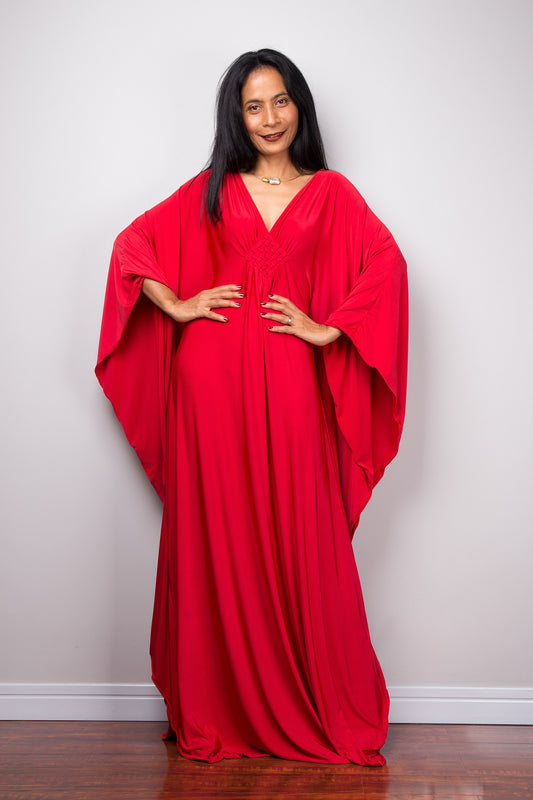
- Classic relaxed: about 6–10 inches (15–25 cm) of ease. This is the most common kaftan cut. Soft, easy, and comfortable without looking oversized.
- Dramatic volume: 12 inches (30 cm) or more of ease. The extra fabric creates a fuller silhouette and more movement, especially in fluid materials.
Fabric changes how that ease is felt. The same amount of ease sits differently in a lightweight, fluid fabric than in a more structured cloth such as handwoven hemp. A wide kaftan in fluid fabric may move easily around the body, while the same width in a substantial woven fabric can feel more structured.
In the end, the right fit is the one that gives you the balance of shape, movement and comfort you actually want.
What Measurements Should You Check?
Size labels can be useful, but they don't tell the whole story with a kaftan.
A medium from one brand may have very different measurements from a medium from another. This is even more noticeable with loose or one-size garments, where the cut of the garment matters more than a conventional size label.

The most useful measurements to check are:
- Bust or chest: The available width through the upper body
- Waist: Particularly important on styles with shaping
- Hips: Relevant on less voluminous or more shaped kaftans
- Length: Usually measured from the shoulder or neckline to the hem
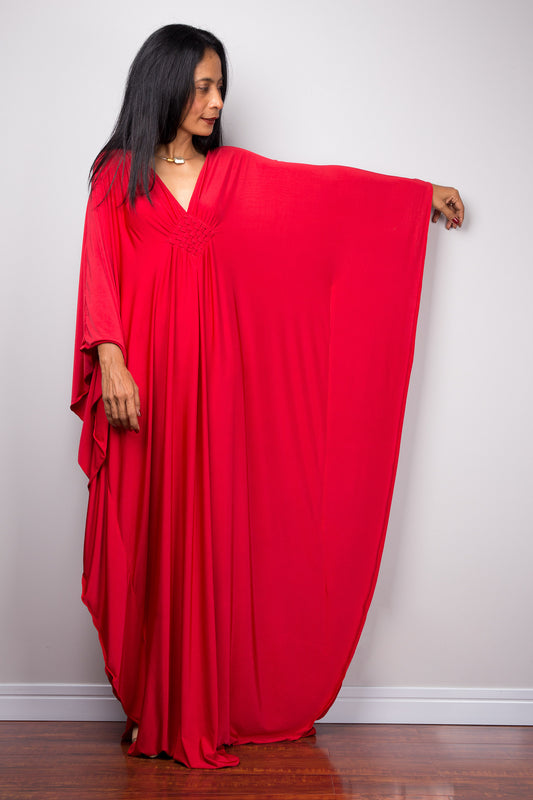
- Sleeves: Length and opening can affect both comfort and proportion
Remember that these are garment measurements, not body measurements.
If a kaftan measures 44 inches around the bust, that does not mean it is intended for someone with a 44-inch bust. The difference between your body measurement and the garment measurement is the ease built into the garment.
A simple way to compare measurements
One of the easiest ways to judge a kaftan before buying is to compare its measurements with a dress, tunic or other garment you already own and like wearing.
Lay the garment flat and measure the corresponding areas, then compare those measurements with the product you're considering.
This can be particularly useful when buying online, because it gives you a familiar reference instead of asking you to imagine what a particular number will feel like.
At Nuichan, we provide individual garment measurements because our pieces are made in different cuts, fabrics and proportions. A size label alone cannot always tell you how a particular garment will fit.
How to Choose the Right Kaftan Length
Length has a significant effect on the way a kaftan looks and feels.

A short kaftan and a full-length kaftan can look quite different even when they are made from the same fabric and share a similar cut. The same width reads differently when the hem falls at the knee rather than the ankle.
Short kaftans
A shorter length can feel easier to wear for someone who is petite, though the overall width, sleeve length, and fabric matter just as much.
Midi-length kaftans
On a shorter frame, a standard midi may sit closer to the ankle, so checking the actual measurement matters more than the label. Depending on the cut, it works with sandals, flats, or a more dressed-up shoe.
Long and maxi kaftans
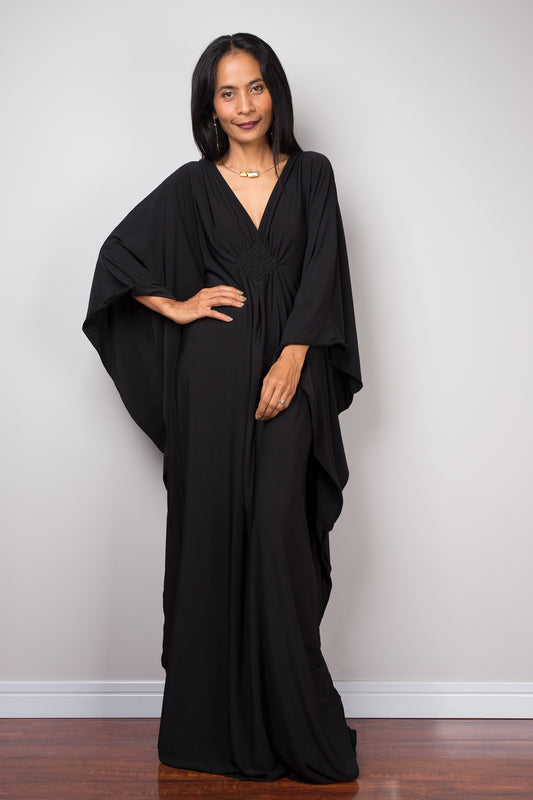
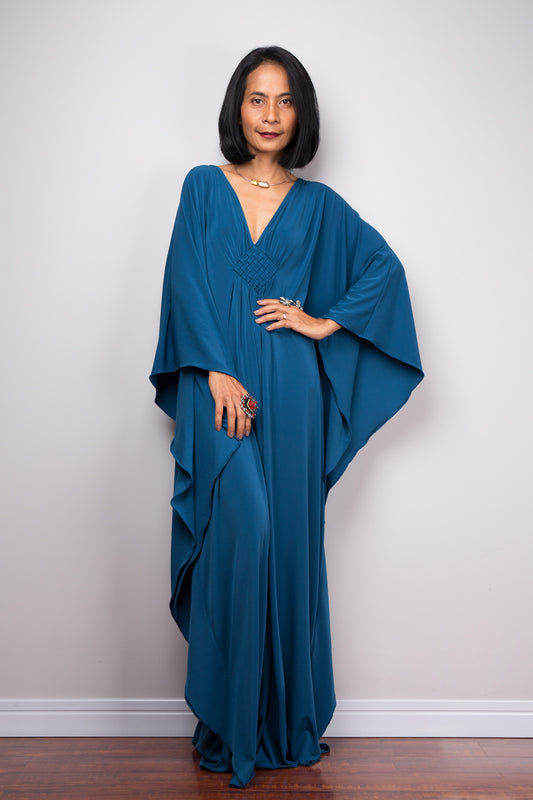
A long kaftan is not reserved for tall women. What matters is how the length works with the rest of the garment’s proportions and with the way you want to wear it.
When choosing a long kaftan online, check the actual shoulder-to-hem measurement rather than relying on descriptions such as “long” or “maxi.” On a taller person, the same length will sit higher.
Why Proportion Matters
Length is only one part of a kaftan's overall proportion.
Consider the relationship between:
- garment length
- body width
- sleeve length
- sleeve volume
- neckline
- fabric weight

A long kaftan with narrow sleeves can create a very different silhouette from a long kaftan with wide, flowing sleeves.
Likewise, a short, wide kaftan can feel very different from a short style with a narrower body.
This is why height alone does not determine whether a particular kaftan will work for you.
Instead of asking, "Am I tall enough to wear this length?", it can be more useful to look at the complete garment and ask:
"How do the length, width and other proportions work together?"
This is particularly important when shopping online, where a product photograph may give you an impression of the overall shape but cannot tell you exactly how large or small the garment will feel on your own body.
How Fabric Affects Kaftan Fit and Drape
The measurements of a kaftan tell you its dimensions, but they don't tell you how the fabric will behave.
Two garments with similar measurements can look and feel quite different because of the material they are made from. Fabric affects two things in particular: how much structure the garment has and how it moves on the body.
Most kaftan fabrics fall into one of four broad groups based on how they drape and move.
ITY jersey, viscose jersey, cotton-rayon.
Smooth, cool to the touch, and ultra-drapey, these fabrics fall in long, continuous folds that move with your body and need virtually no ironing.
Cotton gauze, lightweight cotton, chiffon.
Soft, breathable, and featherlight, with little to no structure. These fabrics follow the body loosely and allow maximum airflow.
Cotton satin, silk charmeuse.
A smooth, softly reflective surface with a polished finish. More weight and body than sheer fabrics, creating clean, elegant lines.
Handwoven hemp, raw silk (dupioni).
Rich in tactile surface texture and natural body. Rather than flowing in liquid folds, these fabrics hold their own shape for a substantial, artisan silhouette.
This is why choosing a kaftan is not only about measurements. Fit and fabric work together.
Kaftan Buying Checklist
Before you buy, check these eight things:
When shopping online, these details tell you considerably more than a size label alone. In the end, choosing a kaftan comes down to understanding how fit, length, fabric and proportion work together, then deciding what works for you.
Frequently Asked Questions
How should a kaftan fit?
A kaftan should feel comfortable without looking shapeless. In practice, a classic relaxed kaftan usually has 6 to 10 inches of ease over your chest measurement, while a closer cut has 2 to 4 inches. The right amount depends on the style you want.
How do I choose the right kaftan size?
Start with your measurements, especially bust, waist and hips, and compare them with the garment's actual measurements. Because kaftans vary considerably in cut and ease, don't rely on your usual clothing size alone. When possible, compare the measurements with a similar garment you already own and like the fit of.
What kaftan length is right for me?
The right length depends on your height, proportions, the garment's volume and the look you want. A longer kaftan can create an elegant, flowing silhouette, while a shorter style can feel lighter and more casual. Look at the whole garment, not just the length.
Can petite women wear long kaftans?
Yes. Being petite does not mean you need to avoid long kaftans. The key is proportion: a long kaftan with controlled volume and a suitable length can create a graceful, elongated silhouette. Very wide or heavily layered styles may feel like too much fabric, so the cut and fabric matter as much as the length. For more on this, see our guide to styling kaftans for petite women.
Does fabric affect the fit and drape of a kaftan?
Yes. Fabric can change how the same kaftan looks and feels on the body. Lightweight, fluid fabrics tend to fall closer to the body and create movement, while heavier or more structured fabrics can hold more shape and add visual volume. Consider the fabric together with its cut and amount of ease.
Choosing a kaftan becomes much simpler once you stop focusing on size labels alone. Look at the actual measurements, the amount of ease, the length, and how the fabric behaves.
When those elements work together, the right kaftan is usually easy to recognise.
You can explore a range of styles, from relaxed everyday cuts to more dramatic silhouettes, in our kaftan collection below :